
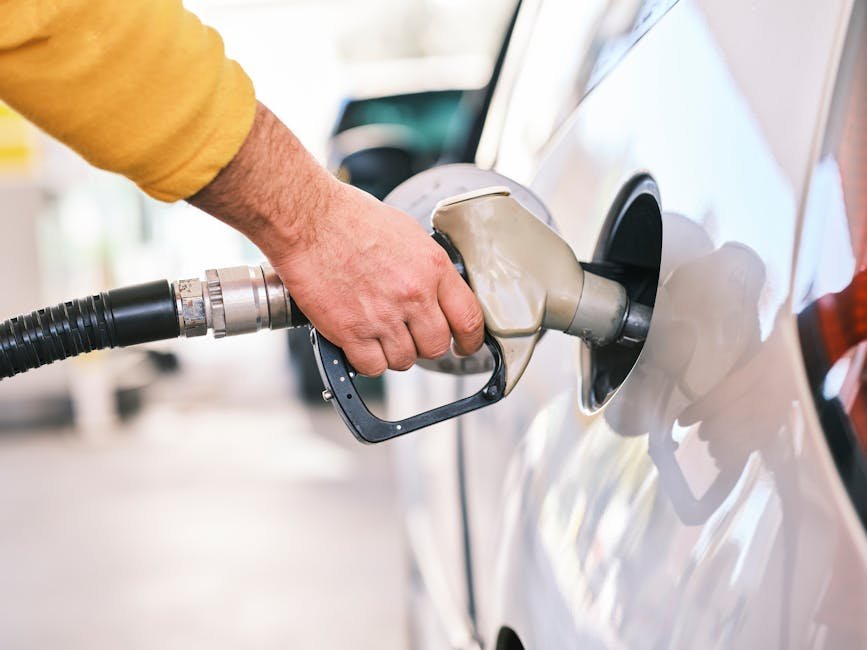
If you hit the road for the Memorial Day weekend, you already know the brutal reality. You pulled up to the gas station, looked at the digital sign, and realized it is going to cost you $70 just to fill up your sedan. The national average for a gallon of regular gasoline just surged past $4.56, with states like California blowing right past the $6.00 mark. Welcome the gas pump tax.
Politicians on television are using words like “supply chain friction” and “seasonal demand” to explain away the pain at the pump. Don’t fall for the political spin. This isn’t just standard inflation or a busy summer travel season.
What you are experiencing right now is a direct, unavoidable tax to fund a foreign conflict. Here is the brutal truth about how the ongoing Middle East war is quietly bleeding the US working class dry, while the political establishment focuses entirely on military optics.
Gas Pump Tax
1. The “Operation Epic Fury” Surcharge
Let’s trace the timeline. In late February, the US and Israel launched strikes against Iran, officially kicking off what the Trump administration has dubbed “Operation Epic Fury.” In response, the Strait of Hormuz—the critical waterway that handles nearly a fifth of the world’s seaborne oil—was effectively closed.
- The Financial Reality: Since that conflict escalated, retail gasoline prices in the US have climbed by roughly $1.50 per gallon.
- The Silent Tax: Research out of Brown University suggests that American consumers have paid a staggering $40 billion in additional gasoline costs since the war began. That averages out to about $300 ripped directly out of the pocket of every single US household. You didn’t vote for a tax increase, but you are paying one every single time you commute to work.
2. Wiping Out the Wage Gains
For the last couple of years, the working class fought tooth and nail for wage increases to keep their heads above the rising cost of living. For a brief moment, wage growth was actually outpacing inflation.
- The Reversal: That progress has been entirely wiped out in less than three months. Because oil touches everything—from the diesel required to ship your groceries to the jet fuel required for business travel—inflation has sharply accelerated again.
- The Class Divide: If you are an executive who can work from home or easily absorb a $100 tank of gas, the war is an abstraction you watch on the evening news. But if you are a commuter, a delivery driver, or a middle-income household, the “Gas Pump Tax” is forcing you to rely on credit cards just to maintain your baseline standard of living.
3. The Illusion of a Quick Fix
The most frustrating part of the current political narrative is the promise that once a peace deal is brokered, the pain will instantly vanish.
- The Mechanical Truth: Even if a lasting peace treaty is signed tomorrow and the Strait of Hormuz reopens, pump prices are not going back to $3.00 a gallon anytime soon. Assessing potentially damaged energy infrastructure in the Persian Gulf and untangling the massive global supply chain backlog takes months, if not years.
- The War Premium: We are entering the summer driving season with depleted gasoline storage levels and an entire market operating on a “war premium.” Energy analysts are already warning that prices could creep toward $5.00 a gallon before the summer is over.
The Verdict
The US economy is heavily insulated compared to the rest of the world, but we are not immune to the geopolitical blast radius.
The next time a politician stands at a podium and talks about the necessity of projecting strength overseas, look at your bank statement. The true cost of this conflict isn’t just being paid in the Middle East; it is being paid by millions of Americans every single time they swipe their card at the pump.