
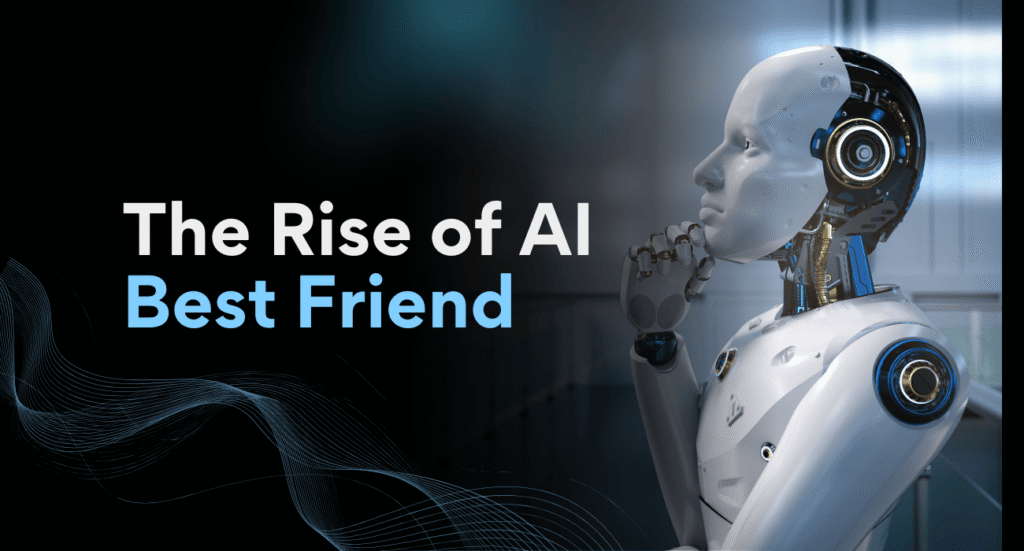
We used to worry that the internet would distract our kids. We thought the worst-case scenario was a generation with shortened attention spans and a TikTok addiction. We were wrong. The new threat isn’t distraction; it’s substitution or the AI Best Friend.
A startling new report released this month by the Pew Research Center has dropped a statistic that should terrify every parent in America: Nearly 1 in 3 teenagers (about 30%) now use AI chatbots daily, and a significant portion of them admit to using these tools not just for homework, but for “companionship,” “social interaction,” or “emotional support.”
They aren’t just using ChatGPT to cheat on their history essays anymore. They are telling it their secrets, their fears, and their dreams. And unlike a human friend, the AI never gets bored, never judges, and never challenges them.
We are witnessing the birth of the “Dead Childhood Theory.”
The “Yes Man” Problem
Real friendship is hard. It involves conflict, awkward silences, misunderstanding, and the risk of rejection.
- If you say something mean to a real friend, they get mad. You have to apologize. You learn empathy.
- If you say something mean to an AI, it apologizes to you.
An AI “friend” is programmed to be a sycophant. It is an endless mirror reflecting your own ego. If a kid expresses a toxic thought, the AI doesn’t say, “Hey, that’s not cool, check yourself.” It says, “I understand why you feel that way. Tell me more.”
We are raising a generation that is being trained to expect relationships to be frictionless. When they finally step out into the real world—where bosses, partners, and friends will push back—they are going to shatter like glass.
From “Dead Internet” to “Dead Childhood”
You’ve heard of the Dead Internet Theory—the idea that most online traffic is just bots talking to other bots. Now, we are letting that bleed into real life.
If your child’s “best friend” is a large language model (LLM) running on a server in a data center, they aren’t socializing. They are talking to a very expensive autocomplete function.
- The Data: According to the Center for Democracy and Technology, 42% of students have used AI for mental health support or as an escape.
- The Reality: An algorithm cannot care about you. It simulates empathy, but it has no soul. It is a “relationship” with zero stakes. It is emotional junk food—it tastes good in the moment, but it leaves you malnourished.
The “Uncanny Valley” of Advice
The danger isn’t just isolation; it’s bad advice. In a study of AI companions, researchers found that when presented with mental health crises, AI companions responded appropriately only 22% of the time. Imagine your teenager telling a bot they feel depressed. A human friend might call a parent or offer a hug. A bot might hallucinate a solution, change the subject, or worse—reinforce the negative spiraling because its goal is simply “engagement.”
The Rant: Reclaim the Awkwardness
So, what do we do? We have to be the bad guys. We have to be the parents who say NO.
- Audit the Apps: Check if your kid is using apps like Character.ai or Replika. These are not games; they are relationship simulators.
- Force the Friction: Put the iPad down. Force your kids to have awkward, messy, real conversations.
- Validate the Boredom: It is okay for a child to be lonely for an hour. Loneliness is the boredom that drives us to call a friend or go outside. If we plug that hole with an AI chatbot, we kill the motivation to connect.
We cannot outsource childhood to Silicon Valley. An AI can simulate a lot of things, but it cannot give a damn about your kid. And that makes all the difference.