
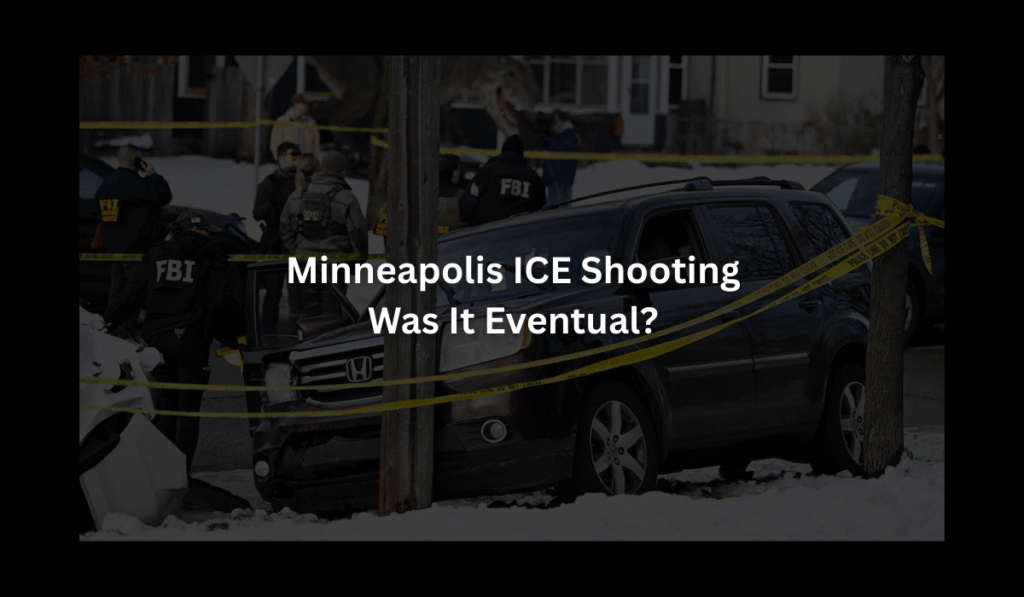
This week, millions of Americans watched a video on X (formerly Twitter) that made their blood run cold. A 37-year-old mother, Renee Nicole Good, sat in her red SUV on a snowy Minneapolis street. Surrounded by federal agents in tactical gear. No badges visible. No warrants shown. Then, the glass shattered. Three shots. And a mother of three was gone. The reaction has been the same chorus we hear after every tragedy: “This isn’t America.” “We don’t execute citizens in traffic stops.” “This is a mistake. This is an anomaly.” But do events like Minneapolis ICE shooting really surprise you anymore?
I am here to tell you the uncomfortable truth: You are wrong. This is America. In fact, the killing of Renee Good isn’t a glitch in the system; it is the inevitable result of a machine we have been building for three decades.
When DHS Secretary Kristi Noem took to the podium yesterday and called a suburban mom a “domestic terrorist” for panicking in her car, she wasn’t going off-script. She was reading from a playbook written in 1992, edited in 2016, and finalized in 2020.
If you are surprised, you haven’t been paying attention. Here is the timeline of how we got here.
1. 1992: Ruby Ridge (The Blueprint)
History doesn’t repeat, but it rhymes. If you think federal agents shooting an unarmed woman is new, Google Vicki Weaver. In 1992, during a standoff in Idaho, an FBI sniper shot Vicki Weaver in the face while she was standing in her doorway holding her 10-month-old baby. The government’s defense? They claimed she was a threat. They claimed the rules of engagement justified it. The Lesson: We learned in 1992 that when the federal government wears camouflage, the rules of “innocent until proven guilty” evaporate. We didn’t fix it then. We just forgot about it.
2. 2016: Philando Castile (The Minnesota Trauma)
Minneapolis has scars that never healed. Ten years ago, Philando Castile was shot in his car, mere miles from where Renee Good died this week. He did everything right. He announced his weapon. He complied. He still died in front of his partner and her daughter. That wasn’t ICE; that was local police. But the message was the same: Compliance does not guarantee survival. When we failed to convict the officer who killed Philando, we sent a message to every badge-holder with a gun: “Panic is a valid legal defense for killing a citizen.”
3. 2020: The Portland Vans (The Escalation)
Do you remember the summer of 2020? In Portland, we saw federal agents in unmarked vans snatching protesters off the street. No names. No agencies listed on their velcro patches. People called it “authoritarian.” The news cycle moved on. But that was the test run. That was the moment we normalized the idea that Federal Agents—not local police—could patrol American streets like an occupying army. We brought the border war to Main Street.
4. 2026: The Inevitable Conclusion
So here we are in January 2026. We have an ICE force that has been given military-grade equipment and told they are fighting an “invasion.” We have a legal system that grants them near-total immunity. And we have Renee Good. She wasn’t a cartel leader. She was a mom dropping her kid off at school. But to a hammer, everything looks like a nail. And to a militarized federal force told to “hunt,” everything looks like a target.
The Verdict
Stop acting shocked. When you give agents war-zone immunity and war-zone weapons, you turn your cities into war zones. Renee Good’s death is a tragedy. But don’t you dare call it un-American. It is the most American thing that happened this week.
Related Links: